
In South Florida, we don’t just live in a state; sometimes it feels like we live in a giant sponge. We all know the feeling of stepping outside and “wearing” the air, but what happens when that humidity moves into your master bedroom or your HVAC closet?
At Mold Finders, we specialize in the science of indoor environments. As the 2026 Rookie Business of the Year for the Weston Chamber of Commerce, we’ve spent the last year proving one thing to our clients: In Florida, humidity isn’t just a comfort issue—it’s a mold issue.
Here is the breakdown of why our tropical air is a playground for microbial growth.
The “Magic Number”: 60%
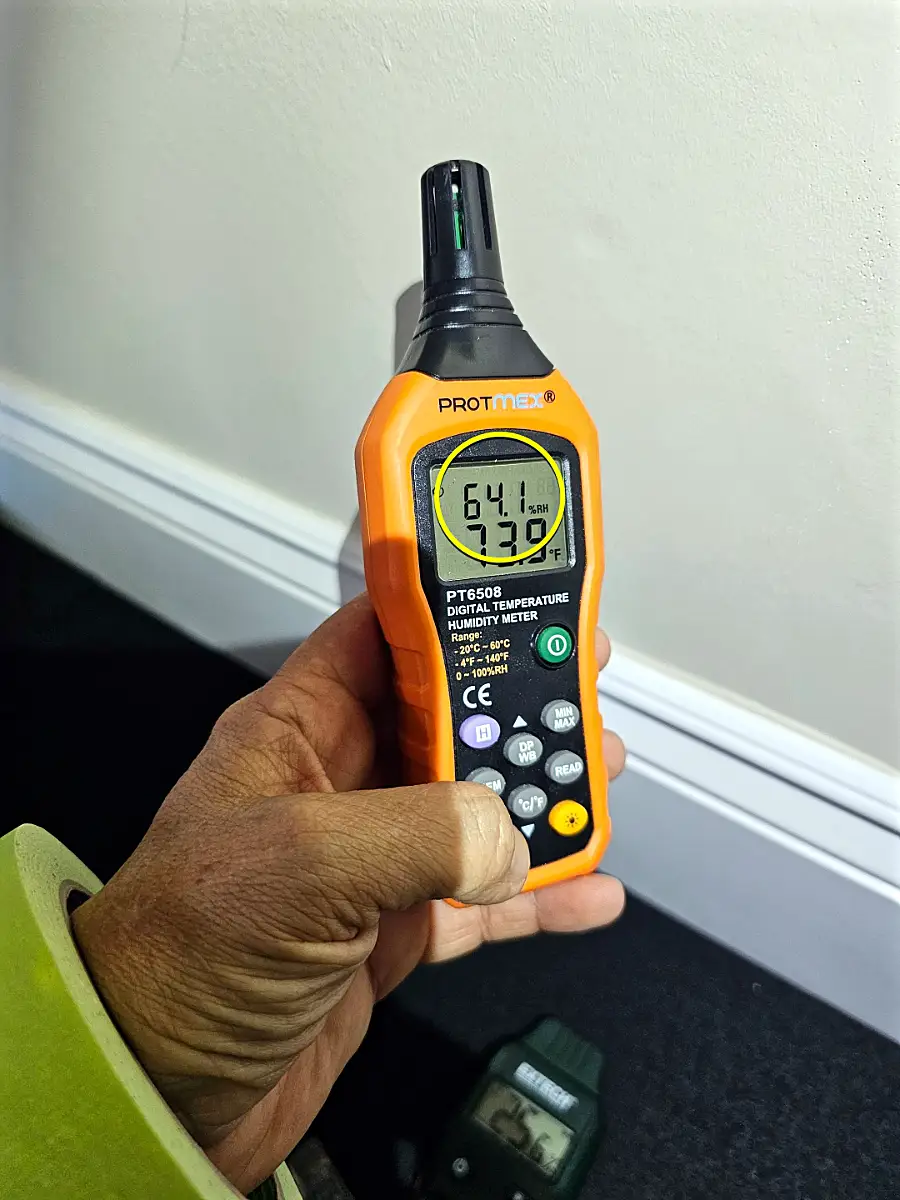
If there is one thing we want every Florida homeowner to remember, it’s the 60% Rule.
Mold spores are everywhere, but they are “dormant” (asleep) until they find moisture. When your indoor relative humidity (RH) hits 60% or higher, those spores wake up and start to colonize your drywall, baseboards, and even your clothes.
- The Danger Zone: 60% RH and above.
- The Safe Zone: We recommend keeping your home between 45% and 55%.
Why Florida is Unique
In other states, you usually need a flood or a pipe leak to get mold. In Florida, the air is so saturated that “ghost mold” can grow on surfaces purely from the moisture in the atmosphere.
When your AC isn’t sized correctly or isn’t running long enough to “squeeze” the water out of the air, your home becomes a literal petri dish. This is why we often find Stachybotrys (black mold) in AC closets—it’s the intersection of cold air, warm walls, and high humidity.
3 Ways Humidity Invades Your Home
- The “Sweating” Vent: When cold AC air hits a warm ceiling (thermal bridging), condensation forms. That water drips into the drywall, and before you know it, you have a ceiling colony.
- Inactive Airflow: Closets and corners with poor circulation trap humid air. This is why you might find mold on the back of a leather jacket or a pair of shoes.
- The “Open Window” Trap: We all love a “cool” spring breeze, but in Miami, that breeze brings in 80% humidity. Once that moisture is inside, your AC has to work double-time to remove it.
How to Fight Back
- Monitor your RH: Buy a simple hygrometer (humidity meter) and keep an eye on it. If it’s over 60%, something is wrong.
- Maintenance is Key: Ensure your HVAC system is serviced regularly. A dirty coil can’t dehumidify your air effectively.
- Don’t Guess—Verify: If your house feels “clammy” or smells musty, the damage might already be starting inside your walls.
The Mold Finders Guarantee
At Mold Finders, we don’t just look for mold; we look for the source. Our 2026 award was built on the foundation of giving homeowners the data they need to keep their air clean and their families safe.
Is your home’s humidity out of control? Contact the 2026 Rookie Business of the Year today for a comprehensive moisture mapping and air quality assessment.